
IP geolocation is the mapping of IP addresses
The technology determines the geographic location of an internet-connected device (country, region, city, or postal code) using its unique IP address.
Matching a device's internet protocol (IP) address
Databases link IP ranges to geographic locations provided by internet service providers, registries, and other data sources.
Key uses of IP geolocation
It is used for fraud detection, personalized content delivery, targeted advertising, audience insights, and security compliance.
Get IP geo with IP Trust and Friendly Captcha
Friendly Captcha offers IP Geolocation data as part of it's Risk Intelligence feature. IP Trust provides standalone IP Geolocation through a REST API or database downloads. Try out now ›
IP geolocation is one of the most widely used tools in modern web infrastructure – powering everything from content localisation to fraud prevention. But how does it actually work, and what can you do with it? This guide covers everything you need to know: what IP geolocation is, how it works under the hood, what data it returns, how accurate it is, and the most common use cases for businesses today.
What Is IP Geolocation?
IP geolocation is the process of determining the real-world geographic location information of an internet-connected device based on its IP address. Every device that connects to the internet is assigned an IP address, and that address can be mapped to a physical location, typically at the level of country, region, or city.
Unlike GPS, IP geolocation requires no hardware sensors or user permissions. It works silently in the background, using publicly available network data to estimate where a user or device is located. This makes it a practical and privacy-respecting alternative to browser-based location APIs.
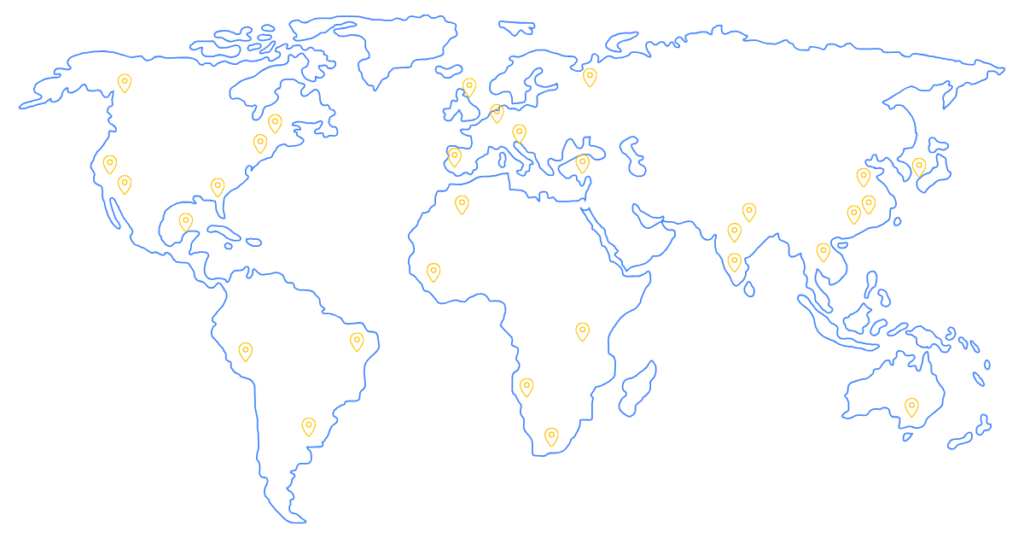
How Does IP Geolocation Work?
IP geolocation uses various techniques to map IP addresses to geolocation information.
The primary approach is to cross-reference an IP address against a database of known IP allocations and their associated geographic regions. Several data sources are used to build and maintain these databases:
- WHOIS Records: Public registration information for IP address blocks, which often includes the country and organisation the block is assigned to.
- Geofeeds: Machine-readable location files that internet service providers and network operators publish voluntarily to declare the geographic location of their IP ranges.
- Reverse DNS: Hostname lookups that can reveal clues about a network’s location based on naming conventions.
Providers like IP Trust source this data directly, owning their entire database rather than reselling data from third parties. This avoids upstream licensing restrictions and ensures you’re always working with first-hand, continuously updated information.
When a lookup is performed, either via an API call or a local database query, the IP address is matched against these records. The data is then used to provide location information at the country, region, and city level, along with coordinates and metadata.
Triangulation and Geolocation of IP Adresses
Triangulation is another approach sometimes used to geolocate IP addresses. With triangulation, each IP address is “pinged” from multiple locations around the world. The time for the device behind the IP to send a response is then measured and compared against the times from other locations. Through this, an approximate actual location can be determined based on the minimal possible response times to each location.
Pros and Cons of Triangulation Method
Triangulation tends to work best for IP addresses managed by hosting providers, where a single IP address maps to a single device and that device is directly reachable over the internet. For residential IP addresses owned by Internet Service Providers, triangulation is less effective, since many users will share a public IP address using a technique known as CGNAT.
This means that the devices behind a single public IP are spread across a wide geographic area and are not directly reachable over the internet. In addition, many Internet Service Providers and intermediaries configure their infrastructure to ignore the types of messages required for triangulation to work. For a large percentage of IPs in use today, this can severely limit the effectiveness of triangulation.
Is Triangulation Efficient?
Triangulation also requires significant resources to implement. To be accurate, triangulation requires many servers in multiple locations which can be expensive to run and operate. This results in increased costs which the IP geolocation provider must pass on to potential customers as part of their service pricing, even though it’s unclear how much the overall quality of the data is is improved.
What Data Can You Get From an IP Geolocation Lookup?
Geolocation information can include a surprisingly rich set of data. Beyond a simple city and country or user’s location, a comprehensive geolocation API will return fields like:
| Field | Example Value | Description |
|---|---|---|
|
`city` |
Barcelona |
City-level location of the IP address |
|
`state` |
Barcelona |
State, province, or top-level administrative region |
|
`country` |
Spain |
Full country name |
|
`area_code` |
93 |
Local area dialling code |
|
`timezone` |
CEST |
Location timezone |
|
`latitude` |
41.389 |
Approximate latitude coordinate (WGS84) |
|
`latitude` |
2.159 |
Approximate longitude coordinate (WGS84) |
|
`country_iso2` |
ES |
ISO 3166-1 alpha-2 country code |
|
`country_iso3` |
ESP |
ISO 3166-1 alpha-3 country code |
|
`country_phone_code` |
34 |
International dialling code |
|
`country_capital` |
Madrid |
Capital city |
|
`country_currency` |
EUR |
ISO 4217 currency code |
|
`country_currency_name` |
Euro |
Full currency name |
|
`country_native` |
España |
Country name in the local language |
|
`country_region` |
Europe |
UN geographic macro-region |
|
`country_subregion` |
Southern Europe |
UN geographic sub-region |
|
`country_emoji` |
🇪🇸 |
Country flag as a Unicode emoji |
IP Geolocation API vs IP Geolocation Database
There are two primary ways to integrate IP geolocation data into your applications: via an API or via a downloadable database. Both have distinct advantages depending on your use case.
IP Geolocation API
A geolocation API lets you send a request to a remote endpoint and receive geolocation information in real time. This is the fastest way to get started. Integration typically takes less than five minutes and works with any programming language. APIs are ideal for applications where lookups happen on demand (such as during user login or checkout) and where query volume is manageable.
Key benefits of IP Geolocation API
Simple integration, typically just a few lines of code
Always up to date – no manual refreshes needed
Fast response times (sub-100ms with quality providers)
IP Geolocation Database
A downloadable geolocation database gives you a local copy of the full dataset in formats like MMDB, CSV, JSON, or Parquet. All lookups happen within your own infrastructure. There are no external API calls required.
Key benefits of IP Location Database
Zero latency lookups
No data leaves your environment – ideal for privacy-sensitive use cases
No rate limits or per-query cost – suitable for high-volume
For organizations with strict data residency or compliance requirements, a local database download is often the preferred approach.
Top Use Cases for IP Geolocation
IP geolocation data has a wide range of practical applications across industries. Here are some of the most common:
Content Localization
Automatically serve your website’s content in the right language and currency based on a visitor’s country or region. Display localized pricing, translate interfaces, and tailor the user experience – all without requiring the user to manually select their location.
Geo-Restrictions and Compliance
Enforce geographic access controls for content licensing, regulatory compliance, or export restrictions. Redirect or block traffic from specific countries or regions to stay within legal boundaries – particularly important for streaming services, financial platforms, and software with export controls.
Analytics and Audience Insights
Understand where your users are coming from at a granular level. Geographic data enriches your analytics stack, helping you identify regional trends, benchmark performance by market, and prioritize expansion efforts. Mismatches between billing details and IP addresses help to prevent fraud and reduce charge-backs.
Ad Targeting and Campaign Optimization
Serve location-relevant ads and promotions. Geolocation data allows you to deliver targeted campaigns and content personalization by country, region, or city – improving click-through and conversion rates on websites and reducing wasted ad spend.
IP Geolocation for Security and Fraud Detection
One of the most valuable applications of IP geolocation is in fraud prevention and security monitoring. IP location data allows systems to identify anomalies that would otherwise go undetected:
Online fraud: To prevent fraud, users flag payments where the IP location doesn’t match the billing address or shipping destination.
Account takeover: Detect suspicious logins from unexpected geographic regions, triggering step-up authentication or alerting the account holder.
Bot and scraper detection: Combine IP location with ASN data to identify traffic originating from data centers or hosting providers rather than residential users.
Velocity checks: Identify impossible travel scenarios, such as a user appearing in two countries within minutes of each other.
When combined with additional IP intelligence signals – such as VPN detection, proxy detection, and hosting identification – IP geolocation becomes a powerful layer in a broader fraud detection stack.
How Accurate Is IP Geolocation?
IP geolocation accuracy varies depending on the level of granularity requested and the quality of the underlying data sources.
Country level: Accuracy is typically above 99% for quality providers. Country-level geolocation is highly reliable and suitable for compliance use cases such as geo-blocking.
Region/state level: Accuracy is lower but still broadly reliable for most ISPs and network operators.
City level: Accuracy depends heavily on the availability and quality of geofeeds, WHOIS data, and reverse DNS records for a given IP range. Coverage is best in densely populated and well-documented network environments.
It’s important to understand that the returned IP location is an approximate location – typically the location of the network infrastructure serving the IP address, not necessarily the device’s precise real world location. For mobile users, this might reflect a city-level exchange point rather than their exact street.
Despite providing only approximate locations compared to other approaches such as GPS, IP geolocation still provides data accurate enough for many use cases while providing a frictionless experience and fully respecting end user privacy.
Popular IP Geolocation Tools and Services
There are a number of IP geolocation providers on the market, ranging from free tools with limited accuracy to enterprise-grade services with comprehensive data and SLAs.
When evaluating a provider, consider the following:
Data sourcing: Does the provider own its data outright, or is it reselling from an upstream source?
Update frequency: IP allocations change constantly. Daily updates are the benchmark for keeping data fresh.
Legal and Compliance: IP address data is sensitive; does the provider have an appropriate Data Protection Agreement and Privacy Policy in place?
Coverage: Does the provider support both IPv4 and IPv6 across all regions?
Delivery options: Is both an API and a downloadable database available? Is the provider transparent on database pricing, or is it hidden? Such providers can end up being extremely expensive.
IP Trust offers a geolocation API and downloadable database with daily updates, full IPv4 and IPv6 coverage across 250+ countries, and a rich metadata set in every lookup. IP Trust is developed and operated in the EU and takes a privacy-first approach to providing IP data with a detailed data protection agreement, privacy policy and transparent database pricing.
For existing Friendly Captcha customers, IP geolocation data is also available through the Risk Intelligence feature.
Conclusion
IP geolocation is a foundational tool for any business operating online. Whether you’re localizing content, enforcing compliance, protecting users from fraud, or enriching your analytics, understanding where your users are is a critical first step.
The best geolocation implementations combine accurate, frequently updated data with the right delivery model for your infrastructure – API for real-time lookups, or a local database for high-volume, privacy-first environments.
If you’re looking to add IP location data to your stack, IP Trust offers a free 30-day trial with no credit card required. You can explore the full data set and test against your own traffic before committing to a plan.
FAQ
IP geolocation is the process of determining the geographic location of an IP address – such as country, region, and city – using publicly available network data including WHOIS records, geofeeds, and reverse DNS. It requires no GPS or user permission.
Country-level accuracy is typically above 99% with quality providers. City-level accuracy is lower and depends on the availability of geofeeds and WHOIS records for the specific IP range. IP geolocation provides approximate locations, not exact street addresses.
No. IP geolocation returns an approximate location – typically tied to the network infrastructure serving an IP address rather than the physical device. It is not suitable for identifying specific street addresses or precise coordinates.
An IP geolocation API delivers location data in real time via HTTP requests to a remote endpoint. A geolocation database is a downloadable file (CSV, MMDB, JSON, or Parquet) that you host locally, enabling zero-latency lookups with no external calls. APIs are easier to get started with; databases are better for high-volume or privacy-sensitive environments.
Geolocation alone cannot reliably detect VPNs or proxies. However, when combined with dedicated VPN detection and proxy detection data – as offered by providers like IP Trust – you can identify anonymized traffic alongside its apparent geographic location.
A comprehensive IP geolocation lookup returns city, state, country, latitude, longitude, ISO country codes, phone dialling code, capital city, currency, native country name, geographic region and sub-region, and country flag emoji – all in a single response.
 English
  German
  French
  Spanish
  Italian
  Portuguese